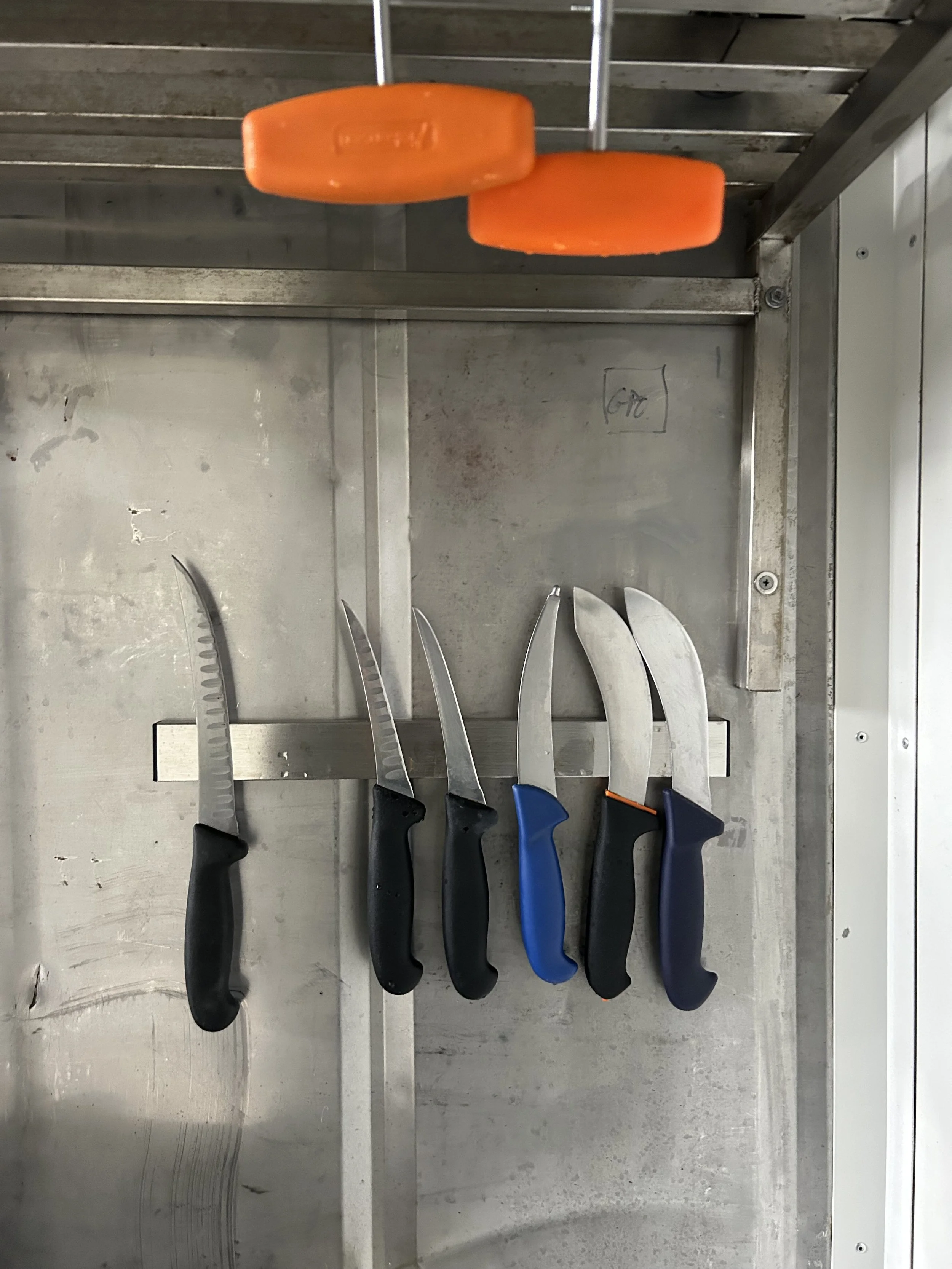
Friends and comrades, we did it! It feels like it has taken an embarrassingly long time to research, model, design, plan, build, and finally license our on-farm micro-abattoir here at Jonai Farms & Meatsmiths.
It started in 2017 with a research trip to the US, which led to the Dead Local Meat report. It would be three more years of tyre kicking before we approached Council for a pre-planning meeting, hoping to submit a Development Application (DA) for an abattoir. The planners told us we would need a pig farming permit before we could apply for an abattoir, and so we applied for a permit to do what we had been doing for ten years. The ‘existing use’ was ‘a pastured pig and cattle farm,’ and the proposed use was ‘a pastured pig and cattle farm,’ and yet it took six months for approval to be granted. We carried on, somewhat dispirited by this engagement with planning.
In November 2022, we submitted our DA for the abattoir. After some routine requests for information (RFIs), all but one Councillor voted to grant us the permit. We celebrated by catching three trains to Townsville, where we met up with our Landcruiser for a beautiful month of camping up to the tip of Cape York and home through the desert. Just as we slipped out of reception, the lifestylers across the road took Council and us to VCAT, objecting to the reality of farmers having control of our supply chain that might mar their image of a perfectly mown paddock, courtesy of his and hers ride-on mowers used on frequent summer weekend visits from their primary home in the city. It was a long, convoluted struggle, but ultimately, we won resoundingly, with the VCAT member agreeing with us that a micro-abattoir is in fact ancillary use to farming – essential infrastructure intrinsic to livestock farming. 550 days after submitting our DA, in March 2024, a permit was granted (though due to an ‘oversight’, it was not actually sent to us until May). Winning this case would set a critical precedent that would see the planning rules changed the next year, so thanks for that Mr & Mrs Lifestyler. Now we can have micro-abattoirs everywhere!
In March 2024, while awaiting the VCAT decision, we decided to change gears slightly and build a vehicle-based abattoir instead, which removes the need for a planning permit. We bought a container and set to work on the redesign, while Stuart also helped Josh build a wash-and-pack shed for Tumpinyeri Growers’ market garden down next to the abattoir site. The ‘design-while-building-while-also-building-something-else’ approach made for very slow progress in that first year.
In December 2024, Kilcoy ceased small-lot service kills at the Hardwicks abattoir in Kyneton, 40 minutes away, where we had taken cattle for 12 years. The Agroecology & Food Sovereignty Alliance swung into action, launching a national campaign after the fifth abattoir was lost to smallholders in less than six months across Australia. Stuart sped up the build. We now had transport cattle four hours to Wangaratta, to a great family-run abattoir, but it was a long way for animals to endure a ride in the trailer. Once, they sent a very large beast back as it was too big for their system. We decided this would be the first beast killed to test our facility’s capacity to cope with a nearly one-tonne live animal, which is what we designed and built it for. More on that later.
August 2025 was a watershed moment in the struggle for food sovereignty, as the Victorian Government announced we had won the reforms we had been fighting for since 2017, to make micro-abattoirs a schedule 1 use in the agricultural zones (Farming Zone, Green Wedge A, Rural Activity Zone), acknowledging them as rural industry ancillary to farming. Now, nobody building an abattoir that produces less than 120 tonnes of product per annum requires a planning permit, saving them the 550+ days that delayed our project so much. Viva!
By this point, it was very clear that we were not actually building a vehicle-based abattoir, which was too big an engineering challenge to achieve the strength and height required for cattle. We had changed designs from what was approved by planning (which no longer mattered), and the container now articulates to a 5 x 5 metre salle de mort, or slaughter floor. We maintained the Temple Grandin lairage, with the semi-circular forcing pen and curved race to help cattle, in particular, feel more comfortable as they like to turn back to where they came from. We also changed the knockbox, as our original plan to use our cattle crush was identified as a possible OH&S risk for the slaughterfolk. Back to the drawing board, Stuart used Temple Grandin’s knockbox designs and fabricated one in a week from steel he had salvaged, in true bricoleur style.
As we rolled into 2026, I insisted that nearly two years of construction must finally produce the much-needed abattoir. The pressure increased, and the working days got longer, weekends a distant memory as I finally found unskilled jobs fit for a sh*tkicker like me. I learned to concrete and seriously upped my siliconing game so that Stuart could stay focused on the more technical final aspects of the build.
Then Stuart got bitten by a sow. She got him on the calf, resulting in a very painful but thankfully small case of ‘compartment syndrome’, a limb-threatening condition where the internal hematoma (bruise) causes dangerous pressure on surrounding muscles. He’s lucky he didn’t have to have it surgically opened up to relieve the pressure, and within a week, the limp started to fade.
As April 2026 flew past, I looked at the calendar and did the maths backwards from my flight to Turkïye in July for food sovereignty meetings. We needed to kill that huge cow by the 19th of June, so I put ‘contact Primesafe’ in the calendar for the 10th of June. Stuart pushed his rising panic down and worked tirelessly, an increasing number of us alongside him as our adult orsmkids pitched in (including son-in-law Ben, who has been managing livestock for 18 months on the farm).
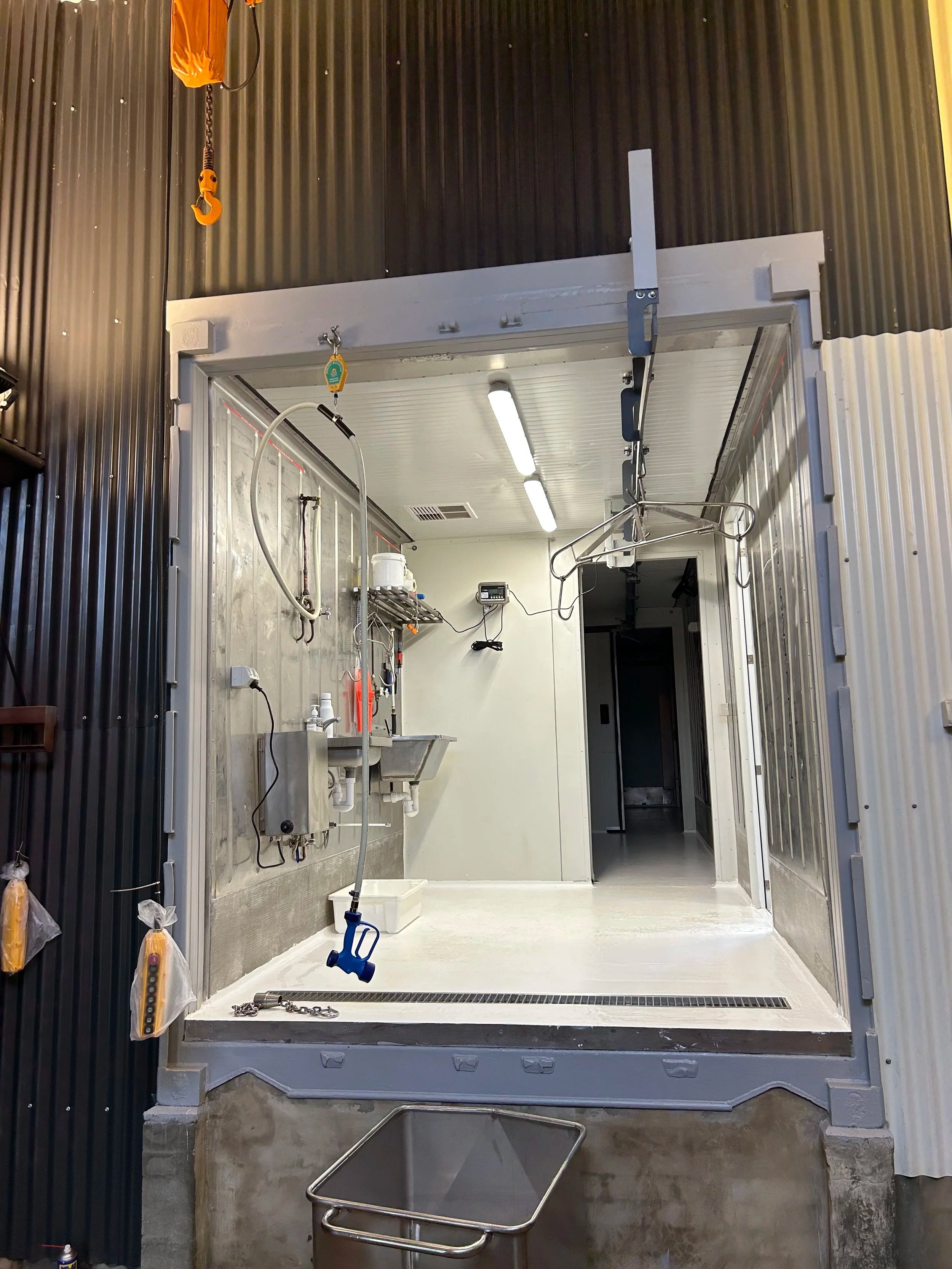
With floor epoxy and the last of the external cladding still to be applied, I rang Primesafe on Wednesday the 10th, sussing out their availability for an inspection late the next week. I was told my chances were best if I applied for the licence asap, so I did, which also set the ball rolling for my meat inspector’s stamp to be fabricated, as a licence number was generated immediately. The inspectors confirmed they could come on Tuesday the 16th at 9am. Gulp. The inspection was friendly and supportive, with a few minor corrective actions requested. I sent them through before we went to bed that night. Wednesday we heard nothing. Gulp.
On Thursday the 18th of June, we got the call… we got the licence! We could commence operations first thing Friday morning, my deadline to kill that cow! I dashed into Melbourne to collect the now-released meat inspector stamp, and back home to prepare for our first slaughter day.
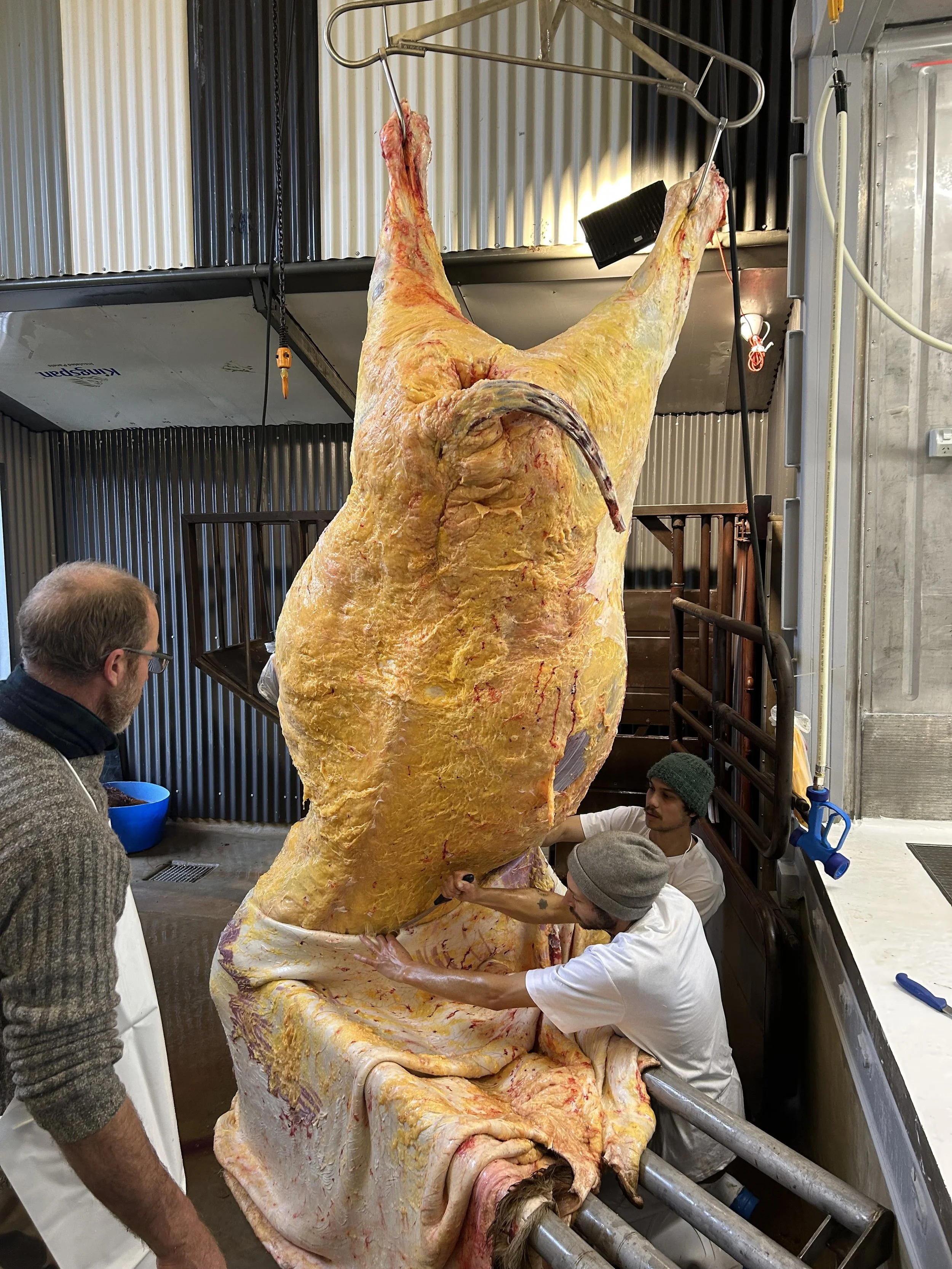
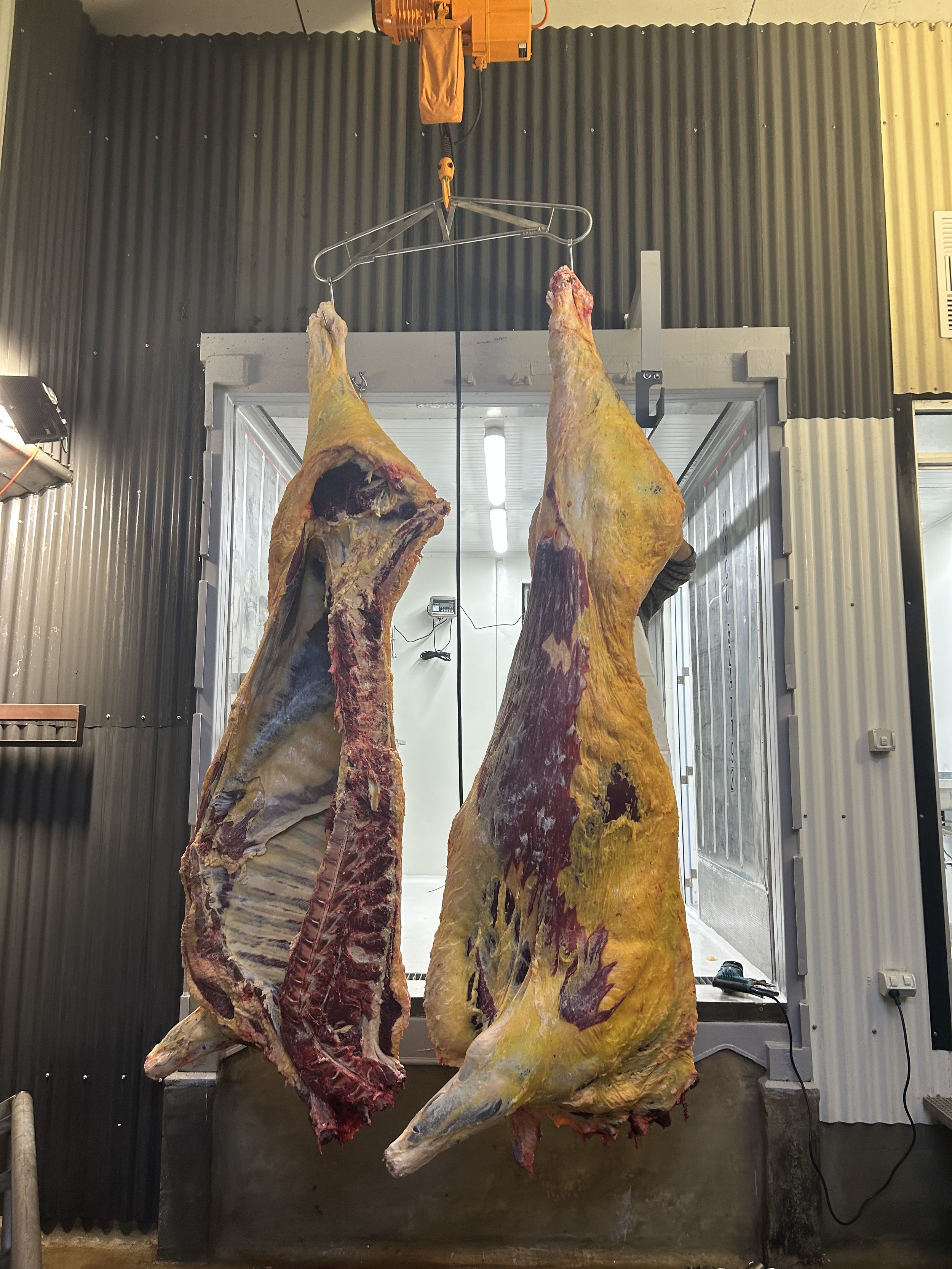
That massive first animal dressed out at 530kg, meaning she was not that far shy of a one-tonne cow live. The facility coped, and so did we (just). All systems performed to and above standard. The slow-cooked cheeks (which we could never get back from the old abattoir) were uncommonly delicious at dinner the next night, as was the also previously unavailable oxtail and tongue, made into fabulous tacos de lengua.
We killed five of Will’s pigs (of Pig & Earth Farm) the following Monday, testing the new scalding tank and our de-hairing skills. Our little team of three – Will, me, and orsmintern Tom – enjoyed a day of steady improvement visible in the tidiness of the final carcasses on the line. Tomorrow we will slaughter seven of our pigs, and eight on Tuesday, a total we hope to get through in a single processing day in future as we get faster at our work. Over the 10 days ahead, we’ll butcher the 15 pork carcasses and that 530kg beef carcass, and Ben will deliver the meat to our patient and supportive CSA members after dropping me off at the airport for the flight to Istanbul.
Perhaps this lengthy tale makes it obvious why Stuart is then meeting me in Hokkaido for three weeks of eating fish, camping, and walking in national parks. After that little rest and refresh, we’ll be back and ready to bed down the new system, adding service kills beyond the Meat Collective members by the end of the year. Oh, and Stuart will just whip up a new boning room next to the abattoir, because there really is no rest for the wicked (so one day we should stop being so wicked!).
Somebody in our Meat Collective said ‘bloody-mindedness is an underrated trait’, and I reckon they’re right. So are patience and persistence, which are key to much of what we achieve here at Jonai Farms. And as fellow farmer Lauren from Bundarra said, ‘my there be more weight on your rail than your shoulders,’ to which we say, ‘hell, yeah!’
Let me finish with another huge thank you to the hundreds of people who have supported us through this process, whether by purchasing my cookbook or attending one of the fundraisers, popping cold hard cash in our bank account, donating to the raffle, helping lay concrete or weld up some steel, you are legion, and together, we did this. Now for more communities across so-called Australia and the rest of the world to come together to reclaim the means of production and processing from the greedy hands of corporations! Go forth and flourish together! Viva!